
Care & Maintenance
Watering
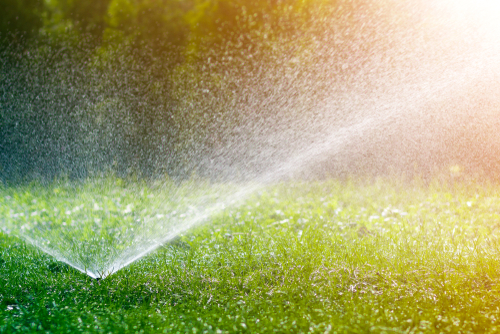 Recommendations:
Water immediately after installation and each day 2 times a day. It is best to water during the early morning hours to reduce water loss by evaporation, before 9 a.m. and again between noon and 3 p.m. Stick to this schedule for approximately 3 weeks. Do not water in the evening to reduce the possibility of disease development by the grass remaining wet at night. Overwatering can promote weed and disease development.
Bahia:
The average established Bahia lawn will require 1 to 2 applications per week during the summer and 0 to 1 applications a week during the cooler parts of the year.
St. Augustine Floratam, Palmetto and Seville:
The average established St. Augustine lawn will require 2 to 3 applications per week during the summer and 1 to 2 applications during the cooler part of the year.
Bermuda:
The average established Bermuda lawn will require 2 to 3 applications per week during the summer and 1 to 2 applications during the cooler part of the year.
Empire Zoysia:
To maintain a high quality lawn, Zoysia grass will require 2 to 3 applications per week during the summer and 1 to 2 applications during the cooler part of the year.
Your content goes here. Edit or remove this text inline or in the module Content settings. You can also style every aspect of this content in the module Design settings and even apply custom CSS to this text in the module Advanced settings.
Mowing
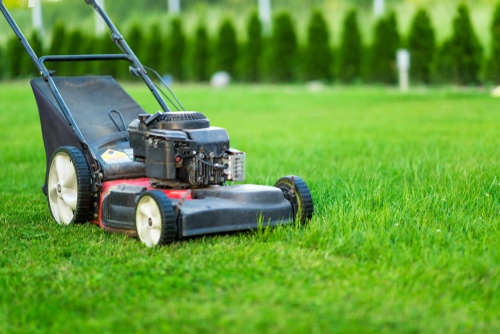
Proper mowing practices are important in maintaining the health of your lawn. The first mowing for newly planted grass should not be done until the grass is rooted (4 to 6 weeks). The quickest means of checking this is to reach down and try to pull up a piece. If you feel resistance, it is safe to mow. Regular mowing at the proper height will cause the least stress on your grass. You should not let your grass grow to extreme heights and then mow off more than 1/3 of its height at one time.
It is important to maintain sharp mower blades so that the grass is cut and not torn. Dull blades that shred the leaf will give your lawn a brownish cast. Due to its tough leaf, Bahia will require more frequent blade sharpening than other grasses.
Grass clippings can be left on the lawn that is mowed at the proper height and frequency. Not only does this reduce the strain on landfills, but the clippings do return nutrients to the soil. An exception might be if you’ve let your grass get too high and excessive clumps are formed when you mow.
Bahia:
Bahia should be cut in the height range of 3-4 inches. This height can usually be maintained by setting your mower at its highest wheel position. Mowing too close or scalping is one of the most common damaging factors in Bahia grass.
St. Augustine Floratam, Palmetto and Seville:
The various varieties of St. Augustine have different growth habits and thus require different mowing heights. Floratam, the most commonly used variety, should be cut in the height range of 3-4 inches. This height can usually be maintained by setting your mower at its highest wheel position. Seville, a semi- dwarf variety, should be mowed at about 2 inches. Palmetto can be mowed in the range of 2-3 inches, although if you have both Palmetto and Floratam in your yard, they could be mowed at the same 3-4 inch range.
Bermuda:
Bermuda should be cut in the height range of 3/4 to 1 1/2 inches. This height usually requires mowing at least once a week. A reel mower is preferred to mow Bermuda because it can be adjusted more accurately for such short mowing heights as well as giving a much cleaner cut than a rotary.
Empire Zoysia:
Zoysia should be cut in the height range of 1/2 to 1 1/2 inches. This height usually requires mowing at least once a week during peak growing weather and every 10 to 14 days during the rest of the year. A reel mower is preferred to mow Zoysia because it can be adjusted more accurately for such short mowing heights as well as giving a much cleaner cut than a rotary.
Fertilizing
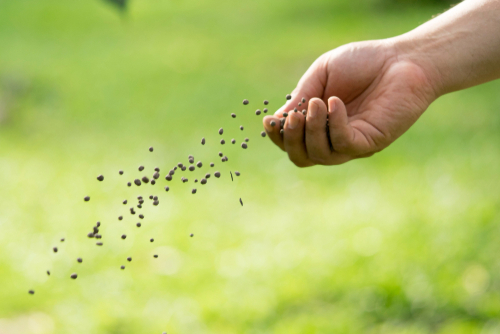 The most common variable in establishing a fertilizer program is soil and its ability to hold onto nutrients. Any good sod delivery service in Orlando will tell you that rich soils have good nutrient retention and thus require fewer applications. Sandy soils leach nutrients quickly and consequently require more frequent applications. It is not advisable to apply during the heat of the summer. There are many formulas and brands of fertilizer on the market, so one particular type is not recommended over another. Nitrogen is always the first number of the three major nutrients (e.g., 12-3-8, 16-4-8, etc.- where nitrogen is the higher number). It is suggested that the higher nitrogen formulas be used during the spring and fall, whereas any other applications should be more balanced (e.g., 6-6-6, 8-8-8, etc.). In all cases, use a good quality fertilizer that contains a mixture of minor (secondary or trace) elements. Usually, the higher percentage of nitrogen that is organic the longer lasting, though slower reacting, the fertilizer will be. It is usually suggested that you wait about 1 month before fertilizing newly planted grass. If you want to apply something before that time, either apply at about half the normal rate or use a slow release type like Milorganite that won’t burn the newly emerging roots. It is best not to use a “weed & feed” type of fertilizer. These types contain a herbicide (weed killer) that could injure new sod. The best defense against weeds is a healthy lawn and herbicides should be saved for cases where weeds are already becoming established because of a turf grass that has been weakened by other causes.
Whatever type of fertilizer you use, it is very important that you follow the label directions as to rate, time of application, etc.
Bahia:
Due to its use in lower maintenance areas, Bahia is not generally fertilized as heavily. However, if you feel that fertilizing is a necessity, please close follow the general instructions previously mentioned.
St. Augustine Floratam, Palmetto and Seville:
St. Augustine lawns generally like high nitrogen levels. There are many formulas and brands of fertilizer on the market, so one particular type is not recommended over another. Contact the Department of Agriculture for further information
Bermuda:
Generally, Bermuda grasses require higher levels of fertilizer than other Florida turf grasses. When Bermuda is used in lawn areas it should be fertilized from 4 to 6 times per year. It is best not to apply during the heat of summer.
Empire Zoysia:
To look their best, Zoysia grasses require 4 to 6 fertilizer applications per year. It is best not to apply during the heat of summer.
Disease
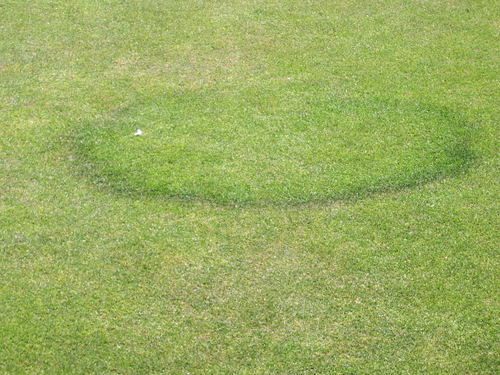 There are generally two types of disease problems in turf grass: those that involve less obvious signs such as root and stem rot, and those that exhibit some type of clearly visible leaf spot. There are many different species within those two groups, some of which can only be accurately identified by laboratory analysis. Turf grass diseases can be chemically controlled with the proper use of fungicides. If you suspect a disease problem, check with a spray service, county agricultural agent, or a knowledgeable garden center for recommendations on the proper chemical. From a cultural standpoint, the most common factor favoring disease development is over watering, as most pathogens require a moist environment. This can be a particular problem in shady areas as they are slow to dry out. A healthy turf grass that is watered, fertilized, and mowed properly is much more resistant to disease and recovers faster if it is attacked. As a top sod service in Orlando, we know a thing or two about disease management!
Pests
Bahia:
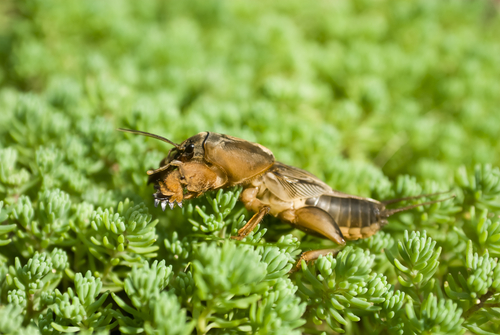
The major pest of Bahia grass is the mole cricket. It burrows through the soil and damages the roots. Damage symptoms will usually appear as rapid wilting and general poor health. Army worms and grass loopers can also damage Bahia, although it is rare as Bahia’s tough leaf blade is not as palatable to them. Damage symptoms are chewed leaves that left untreated will be eaten down to the stem (as if scalped by a mower set too low).Most of the time the above insects are active during the warmer part of the year. There are many pesticide formulas and brands available for controlling such pests so it is advisable to consult with a spray service or a knowledgeable garden center for the product that is right for the problem.
St. Augustine Floratam, Palmetto and Seville:
The major pest of St. Augustine grass is the chinch bug. The Floratam variety is the only type currently available to show any resistance to the chinch bug. Even that resistance, though, seems to be limited to smaller concentrations of bugs. Large populations will also damage Floratam. Damage symptoms will usually appear as areas that are wilting and not responding to watering. The areas will progress from yellow to brown and gradually get larger as the bugs work their way out. Other common insect pests include sod webworms, armyworms, and grass loopers. Damage symptoms are chewed leaves that left untreated will be eaten down to the stem (as if scalped by a mower set too low). Most of the time the above insects are active during the warmer part of the year. There are many pesticide formulas and brands available for controlling such pests so it is advisable to consult with a spray service or a knowledgeable garden center for the product that is right for the problem.
Bermuda:
A major pest of Bermuda grass is the mole cricket. It burrows through the soil and damages the roots. Damage symptoms will usually appear as rapid wilting and general poor health. Other common insect pests include sod webworms, armyworms, and grass loopers. Damage symptoms are chewed leaves that left untreated will be eaten down to the stem (as if scalped by a mower set too low). Bermuda grass mites are another common pest. Because the mite is so small it is difficult to see and gives the general symptoms of pale grass color with abnormal leaf curling. Most of the time the above insects are active during the warmer part of the year. There are many pesticide formulas and brands available for controlling such pests so it is advisable to consult with a spray service or a knowledgeable garden center for the product that is right for the problem.
Empire Zoysia:
The most serious pest of Zoysia grass is the billbug. It feeds on the roots and the grass dies in irregular patches. As with all root damage, initial symptoms appear as areas that are wilting and not responding to water. Other common insect pests include sod webworms, armyworms, and grass loopers. Damage symptoms are chewed leaves that left untreated will be eaten down to the stem (as if scalped by a mower set too low). Most of the time the above insects are active during the warmer part of the year. There are many pesticide formulas and brands available for controlling such pests so it is advisable to consult with a spray service or a knowledgeable garden center for the product that is right for the problem.
Weeds
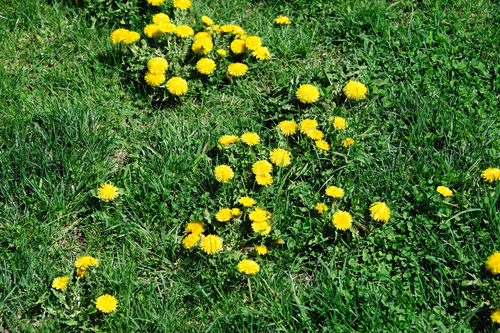 Weeds are almost always a secondary problem. A healthy, properly maintained turf grass will offer a great deal of resistance to weed development. Weed presence usually indicates a weakness of some sort caused by improper fertilizing, overwatering, mowing too short, insect or disease infestation, etc. If your grass has been weakened and weeds are emerging, there are herbicides for most species. Success in fighting weeds after they have become established depends on proper identification of the weed, finding the right herbicide that controls that type of weed, and the proper application of the chemical. It is very important that you only use weed killers that are compatible with the type of grass in your lawn and that you use the correct rate of application.